
Did you know that ignoring regular vehicle maintenance can cut a car’s life in half? Keeping up with maintenance is key to a smooth and efficient ride. By using a simple car maintenance checklist, you can make your car last longer, drive better, and stay safer on the road.
We know how vital it is to keep your vehicle in good shape. We’re here to help you through it. With preventive maintenance tips, you can dodge expensive fixes, lower accident risks, and keep your car running great.
Key Takeaways
- Regular maintenance can extend your vehicle’s lifespan.
- A simple car maintenance checklist can help you stay on track.
- Preventive maintenance tips can improve performance and safety.
- Neglecting maintenance can lead to costly repairs.
- Regular upkeep enhances overall vehicle reliability.
Understanding Preventive Maintenance
Preventive maintenance is vital for keeping your car running well and avoiding expensive fixes. It’s about doing regular checks and maintenance to stop problems before they start.
What is Preventive Maintenance?
Preventive maintenance means doing regular tasks on your car to stop mechanical failures. This includes oil changes, tire rotations, and checking fluids. It helps your car run better and longer.
Key components of preventive maintenance include:
- Regular inspections to spot issues early
- Scheduled maintenance like oil changes and tire rotations
- Replacing parts before they break
Importance of Regular Checkups
Regular checkups are key in preventive maintenance. They help find problems early, saving time and money on repairs. They also keep your car in top shape, ensuring it runs well and safely.
The benefits of regular checkups include:
- Spotting problems early
- Lower risk of breakdowns
- Better car performance and efficiency
Regular Oil Changes
Regular oil changes are a simple yet effective way to keep your car running well. We know how important it is to take care of your vehicle’s engine. Oil changes prevent engine wear, reduce overheating risk, and keep the engine clean.
Determining Oil Change Frequency
The time between oil changes varies based on your car’s make, model, and how you use it. Always check your owner’s manual for the best oil change schedule. Conventional oil usually needs a change every 5,000 to 7,500 miles. Synthetic oil can go longer, up to 10,000 miles.
But, your driving habits can change how often you need an oil change. Extreme temperatures, towing, or driving in heavy traffic means you might need to change oil more often.
Key Factors Affecting Oil Change Frequency:
- Vehicle manufacturer’s recommendations
- Driving conditions (extreme temperatures, towing, stop-and-go traffic)
- Type of oil used (conventional vs. synthetic)
Choosing the Right Oil for Your Vehicle
Picking the right oil is as important as changing it on time. Think about viscosity and whether to use conventional or synthetic oil. The right viscosity keeps your engine well-lubricated under different conditions.
Synthetic oil is pricier but performs better in extreme temperatures and lasts longer than conventional oil. Always check your owner’s manual to make sure synthetic oil is okay for your car.
Tips for Choosing the Right Oil:
- Check your owner’s manual for recommended oil viscosity and type.
- Consider your driving habits and conditions.
- Consult with a professional mechanic if you’re unsure.
Tire Care and Maintenance
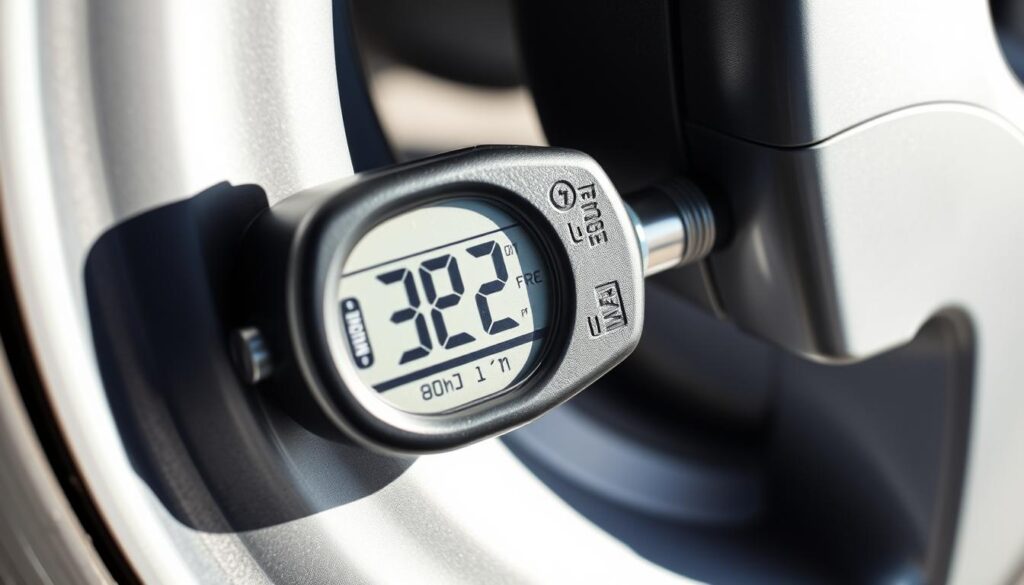
Proper tire care is key for your vehicle’s life and performance. Keeping the right tire pressure, rotating tires, and knowing tread wear are important. These steps help maintain your tires.
Checking Tire Pressure
Right tire pressure is vital for your vehicle’s performance, safety, and fuel use. Underinflated tires cause more fuel use, uneven wear, and poor handling. Always check tire pressure monthly and before long drives.
To check tire pressure:
- Use a reliable tire pressure gauge.
- Check pressure when tires are cold.
- Compare with the recommended pressure on the tire information placard or in your owner’s manual.
Rotating Tires Regularly
Regular tire rotation ensures even tread wear. This can make your tires last longer and improve handling. Rotate tires every 5,000 to 8,000 miles, or as your owner’s manual suggests.
Benefits of regular tire rotation include:
- Improved traction and handling.
- Enhanced fuel efficiency.
- Extended tire life.
Understanding Tread Wear
Knowing tread wear patterns helps spot issues with alignment, suspension, or inflation. Uneven wear can cause poor traction, longer stops, and tire failure risk.
Common tread wear patterns include:
- Center wear: Overinflation.
- Edge wear: Underinflation.
- Uneven wear: Misalignment or worn suspension components.
Brake System Inspection
Keeping your vehicle’s brakes in good shape is key for safety. A well-working brake system helps prevent accidents. It keeps drivers and passengers safe.
Signs Your Brakes Need Attention
There are signs your brakes might need work. Look out for:
- Squealing or grinding noises when applying the brakes
- A spongy or soft brake pedal
- Vibrations or pulsations when braking
- An illuminated brake warning light on your dashboard
If you see these signs, get your brakes checked by a mechanic fast.
Importance of Brake Fluid Replacement
Brake fluid is vital for your brake system. It can get dirty or old, affecting how well your brakes work. Replacing brake fluid regularly is key for safe braking. Check your owner’s manual for when to replace it.
Regular brake maintenance keeps your car safe and saves money on repairs. Adding brake checks to your car maintenance checklist is a smart move for road safety.
Battery Health Check
Your car’s battery is essential for its life. Regular checks can prevent sudden breakdowns. A good battery means your car starts easily and runs smoothly. We’ll show you how to test your battery and give tips to make it last longer.
How to Test Your Car Battery
Testing your car battery is easy and can be done at home. You’ll need a few simple tools. Here’s how:
- Make sure your car is off and in neutral or park gear.
- Use a multimeter to check the battery voltage. A fully charged battery should be around 12.6 volts.
- If the voltage is less than 12.4 volts, your battery might not be fully charged.
- Do a load test with a battery tester to see if it can hold a charge.
Interpreting the Results: If your battery voltage is way off or doesn’t pass the load test, it might need to be replaced.
Tips for Extending Battery Life
To make your car battery last longer, follow these tips:
- Avoid Deep Discharges: Try not to let your battery drain completely. It can shorten its life.
- Keep Terminals Clean: Corrosion on terminals can hurt battery performance. Clean them with a wire brush and baking soda often.
- Secure the Battery: Make sure the battery is tightly held to avoid damage from shaking.
- Avoid Extreme Temperatures: High heat can make the battery fluid evaporate. Cold temperatures slow down the battery’s chemical reaction.
By following these DIY car maintenance tips, you can extend your car’s battery life. This keeps your vehicle running reliably.
Fluid Levels and their Importance
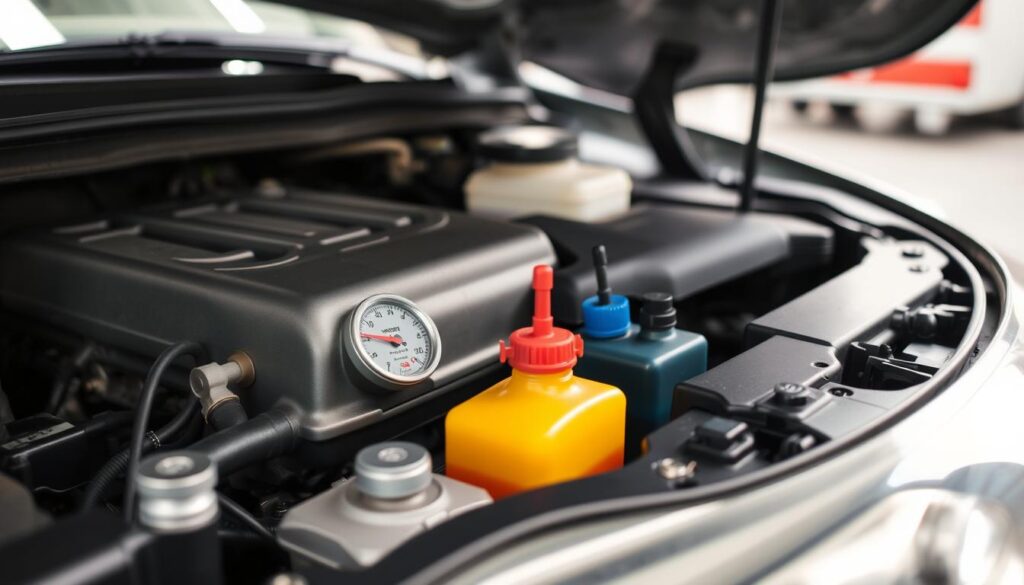
Keeping your vehicle’s fluid levels right is key to its health and life. Your car needs different fluids to run well. If you ignore these, you could face big problems. We’ll talk about why checking engine coolant, transmission fluid, and brake fluid is so important.
Checking Engine Coolant
Engine coolant, or antifreeze, keeps your engine cool. To check it, find the coolant reservoir, a clear plastic tank with lines. Make sure the level is between the lines. If it’s low, add the right coolant. This helps avoid overheating and expensive fixes.
Key steps to check engine coolant:
- Locate the coolant reservoir
- Check the level against the markings
- Top off with the recommended coolant if necessary
Maintaining Transmission Fluid
Transmission fluid keeps your car’s transmission running smoothly. It lubricates and controls temperature. Check the level with the dipstick under the hood. It should be in the right range. If it’s low, add the right fluid. This helps your transmission last longer.
Tips for maintaining transmission fluid:
- Check the level regularly
- Use the correct type of transmission fluid
- Consult your owner’s manual for the recommended maintenance schedule
Keeping Brake Fluid in Check
Brake fluid is vital for your brakes. It helps transfer pressure from the brake pedal to the calipers. Check the brake fluid reservoir and make sure the level is right. If it’s low, add the right brake fluid. This ensures your brakes work right.
Steps to check brake fluid:
- Locate the brake fluid reservoir
- Check the level against the minimum and maximum marks
- Top off with the recommended brake fluid if necessary
By following these tips, you can keep your vehicle’s fluids in check. This helps your car last longer and run better. Regular checks and maintenance are key to keeping your car in top shape.
Wiper Blades and Visibility
Clear visibility while driving is key, and your wiper blades play a big role. They help you see the road well, letting you react fast to changes. This is important for safe driving.
Clear visibility also means keeping the windshield and washer system clean. We’ll look at why wiper blade care is important. And how windshield washer fluid helps you see the road ahead.
When to Replace Wiper Blades
Wiper blades don’t last forever. They can get worn out, making it hard to see in the rain or snow. Here are signs it’s time for new ones:
- Streaks or smudges on the windshield
- Chattering or noise when wiping
- Uneven or incomplete wiping
- Visible cracks or damage to the blades
Wiper blades should be replaced every six to twelve months. This depends on how much you drive and the weather. Checking them often is part of keeping your car safe.
Importance of Windshield Washer Fluid
Windshield washer fluid is also key for clear vision. It cleans your windshield, keeping it clear of dirt and dust. Using the right washer fluid for your area is important. For example, cold weather needs a special fluid to avoid freezing.
Here are some essential car care tips for windshield washer fluid:
- Check the fluid level regularly and top it off as needed.
- Choose a washer fluid that is appropriate for your local climate.
- Consider using a washer fluid with bug remover or other specialized cleaning agents.
By taking care of your wiper blades and using the right washer fluid, you’ll drive safer. These steps are part of keeping your car in good shape. They help your car last longer and make driving safer.
Headlight and Taillight Maintenance
Keeping your vehicle’s headlights and taillights in good shape is key for safety and following the law. Good lighting lets you see the road and be seen by others, cutting down on accident risks.
Checking Bulbs Regularly
It’s important to check your vehicle’s bulbs often. We suggest looking at your headlights, taillights, brake lights, and turn signals for damage or wear. This way, you can replace bad bulbs before they’re a safety hazard.
- Inspect bulbs for visible damage or discoloration.
- Check for proper bulb function during day and night.
- Replace bulbs in pairs for consistent lighting.
Importance of Proper Headlight Aim
Having headlights aimed right is vital for safe driving at night. Misaligned headlights can dazzle other drivers, leading to accidents. We should check our headlight aim often and adjust it if needed. This ensures you can see well and don’t blind others.
By sticking to these preventive car maintenance tips, your vehicle’s lights will always be in top shape. This boosts your safety on the road and adds to a detailed car maintenance checklist.
Engine Air Filter Replacement
Replacing the engine air filter is key to keeping your car in top shape. A dirty air filter can hurt your car’s performance and fuel efficiency. It can even damage your engine if not changed.
Signs of a Clogged Air Filter
Spotting a clogged air filter early can prevent bigger issues. Look out for these signs:
- Decreased engine performance
- Reduced fuel efficiency
- A rough or unstable idle
- Unusual noises from the engine
If you see any of these, check your air filter. A quick look can tell you if it’s dirty or clogged.
Frequency of Replacement
How often to replace your air filter depends on your car and how you drive. Most cars need a new air filter every 15,000 to 30,000 miles.
But, if you drive in dusty or polluted areas, you might need to change it more often. Always check your car’s manual for the best time to replace it.
By following these tips and keeping your air filter clean, your car will run better. Regular checks and replacements are simple but important steps to keep your car in great shape.
Scheduling Professional Inspections
Professional inspections are key to keeping your car in good shape. They help spot problems early, before they get worse. While you can do some maintenance yourself, some checks need a pro’s eye to keep your car running smoothly.
Finding a Trusted Mechanic
To find a good mechanic, ask friends, family, or check online reviews. Look for mechanics who are certified and know your car’s make and model. Certifications like ASE (Automotive Service Excellence) show they’re skilled and up-to-date.
What to Expect During a Professional Inspection
A mechanic will check your car’s engine, brakes, suspension, and electrical systems during an inspection. They’ll give you a detailed report of what they find. This includes any repairs needed or future maintenance tips.
It’s important to ask questions during the inspection. This helps you understand your car’s condition and builds trust with your mechanic.
Keeping Your Vehicle Clean
Keeping your car clean is key for its looks and life span. Cleaning regularly does more than make it look good. It also keeps your car healthy. By following some essential car care tips, you can protect your car’s outside and inside from harm.
Benefits of Regular Cleaning
Regular cleaning stops dirt and grime from damaging your car. It saves you money on repairs and keeps your car’s value up. A clean car is more appealing to buyers and can sell for more. If you’re selling, check out Cash for Cars for details.
Protecting Your Car’s Exterior and Interior
To keep your car in great shape, wash and wax it regularly. Vacuum and clean the inside often to prevent damage and keep it looking new. Following these tips will make your car cleaner and healthier.